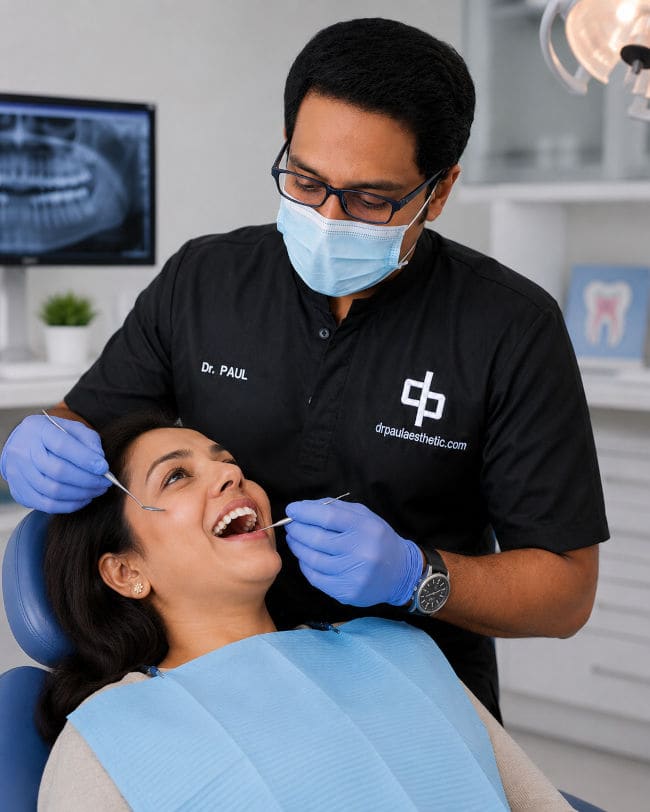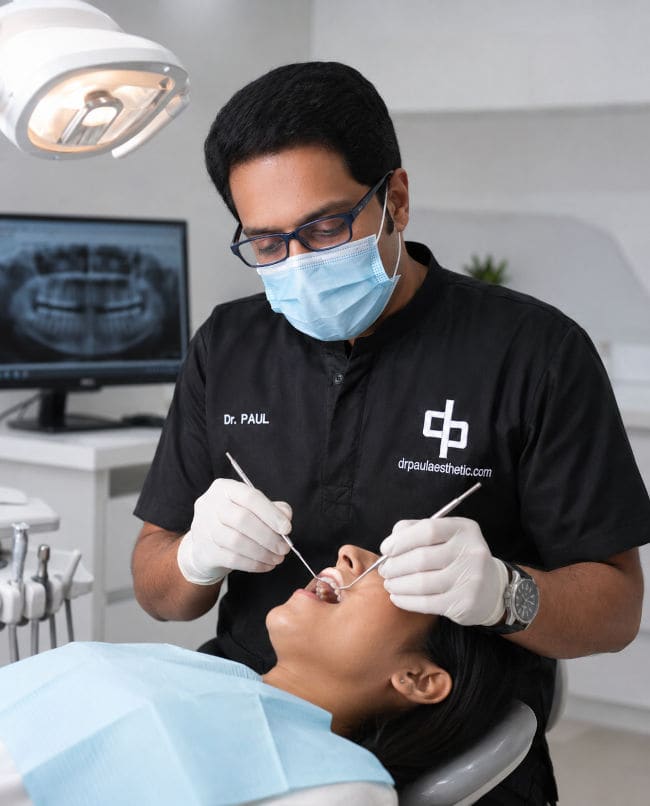
Teeth whitening is one of the simplest and most conservative cosmetic treatments. It does not remove tooth structure, and for many people it produces a noticeable, natural-looking improvement. It still benefits from professional assessment and supervision, because the health of your teeth and gums, the cause of discolouration and any existing dental work all affect the result.
The short answer
Professional whitening starts with a dental check, records your starting shade, and then uses peroxide-based gels — applied in the clinic, at home with custom-made trays, or both — to lighten natural tooth colour. Temporary sensitivity is common. Results vary between individuals and fade gradually, so maintenance is needed.
How whitening works
Whitening gels contain hydrogen peroxide or carbamide peroxide, which breaks down to release hydrogen peroxide. These molecules pass into the tooth and break down the pigmented compounds responsible for discolouration, making the tooth appear lighter. Whitening changes the colour of natural tooth structure; it does not "bleach" the surface like paint.
Before whitening: the assessment
A dental assessment matters because:
- Decay and leaking fillings should be treated first. Whitening gel reaching exposed dentine can cause significant sensitivity.
- Gum inflammation can make whitening uncomfortable and should be managed.
- Existing restorations — crowns, veneers, bonding and tooth-coloured fillings — will not change colour. If they are on front teeth, they may look darker after your natural teeth lighten.
- The cause of discolouration affects the likely result. See Common Causes of Tooth Discolouration.
- Your starting shade is recorded so you can see the change objectively.
In-clinic whitening
During in-clinic whitening:
- Teeth are cleaned and the starting shade recorded.
- The lips and gums are protected with a barrier.
- A higher-concentration gel is applied to the teeth in timed cycles.
- The gel is removed and the new shade recorded.
A noticeable change can occur in one appointment. Some systems use lights; evidence on whether lights add meaningful benefit is mixed.
Home whitening with custom trays
Your dentist takes a scan or impression to make thin trays that fit your teeth precisely. You apply a lower-concentration gel to the trays and wear them for a set time each day — often for one to three weeks. Change is gradual and easier to control, and well-fitting trays keep gel on the teeth and off the gums.
Combined approach
Many dentists recommend starting in the clinic for an initial boost and continuing at home to reach and maintain the desired shade.
Sensitivity
Temporary tooth sensitivity is the most common side effect. It usually resolves within a few days of stopping. It can be reduced by:
- Using a desensitising toothpaste before and during treatment
- Spacing applications out
- Using lower-concentration gels
See Is Professional Teeth Whitening Suitable for Sensitive Teeth?.
How white will my teeth get?
Results vary. Generalised yellowing and age-related darkening often respond well. Grey or banded discolouration, such as from tetracycline, is less predictable and may need longer treatment or other approaches. Your dentist should give you a realistic expectation before you start.
Who should not whiten?
Whitening is generally not recommended:
- During pregnancy or breastfeeding
- For children and younger teenagers
- With untreated decay, gum disease or exposed roots causing sensitivity
- For people allergic to peroxide
How long do results last?
Results fade gradually as teeth pick up stain again. How quickly depends on diet, smoking and oral hygiene. Occasional top-up treatments with your custom trays can maintain results. See How to Maintain Your Smile After Teeth Whitening.
Why not just use shop-bought products?
Over-the-counter products vary widely in effectiveness and safety. See Professional Teeth Whitening vs Home Whitening Products.
Conclusion
Supervised whitening is a conservative way to brighten your smile, and a sensible first step before considering veneers. If you would like to know what whitening could achieve for your teeth, learn more about whitening or book an assessment with Dr. George Paul.
Frequently asked questions
How long does a whitening appointment take?
An in-clinic session usually takes around one to two hours including preparation.
Can I whiten crowns or veneers?
No. Whitening only affects natural tooth structure.
Sources and further reading
Have a question about your own teeth?
Dr. George Paul can assess your situation and explain the options that suit you.
Request a consultation