
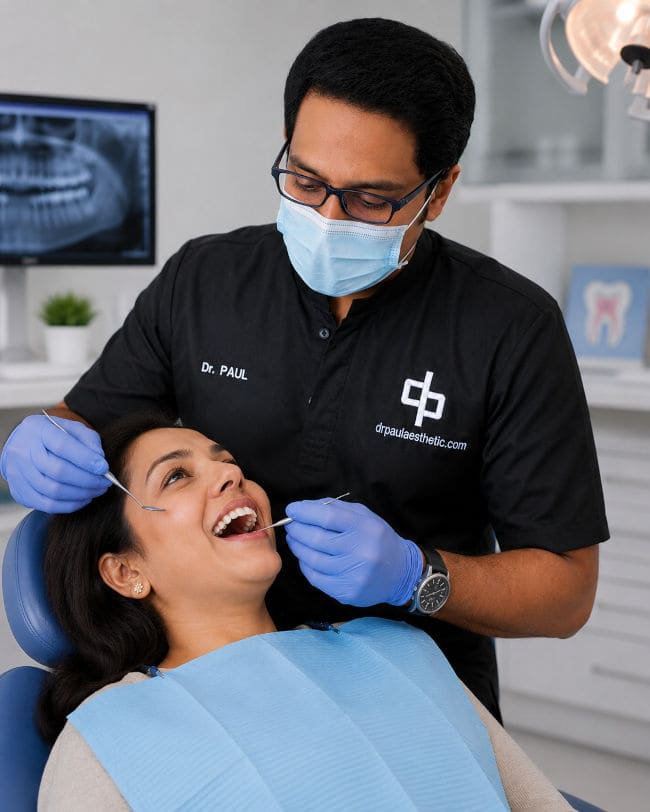
Clear aligners are thin, transparent trays made from a series of digital plans. Each set moves the teeth a small amount, and you change to the next set at planned intervals.
Because they are removable, aligners make eating and cleaning easier than fixed braces — but they only work while they are worn, typically around 20 to 22 hours a day.
Who this treatment may suit
- Adults and older teenagers with mild to moderate crowding or spacing
- Patients with minor relapse after earlier braces
- People committed to wearing aligners consistently
Common concerns it addresses
- Visible braces would be a barrier
- Crowding that makes cleaning difficult
- Small gaps or rotations
Suitability can only be confirmed after a clinical examination.
How clear aligners works
A digital scan creates a 3D model of your teeth. The planned movements are mapped stage by stage, sometimes with small tooth-coloured attachments bonded to teeth to help aligners grip.
You progress through the aligner sets with periodic check-ups. Refinement aligners are sometimes needed near the end.
Consultation and assessment
Dr. Paul will assess whether aligners can achieve your goals, check that your gums and teeth are healthy enough to start, and show you the planned outcome before you commit.
Treatment stages
- 1
Scan and assessment
Digital records and an oral health check.
- 2
Digital plan
Planned movements and expected duration are reviewed with you.
- 3
Aligner wear
Change aligners as directed with regular reviews.
- 4
Retainers
Long-term retention to keep the result.
Potential benefits
- Discreet appearance
- Removable for eating and cleaning
- Predictable digital planning for suitable cases
Risks and limitations
- Poor wear time leads to incomplete results
- Not suitable for every bite problem
- Decay risk increases if sugary drinks are taken with aligners in
- Relapse without retainers
Results vary between individuals and cannot be guaranteed. Your dentist will discuss the risks that apply to you.
Alternative options
- Fixed braces
- Referral to a specialist orthodontist for complex cases
Aftercare
- Remove aligners for meals and drinks other than water
- Brush before reinserting aligners
- Wear retainers as prescribed after treatment
Frequently asked questions
Do aligners hurt?
Many people feel pressure for a day or two after switching to a new set, which usually settles quickly.
Can aligners fix my bite?
Some bite problems can be addressed with aligners; others need different treatment. This is determined at assessment.
Where this treatment is available
Dr. Paul sees patients at Lakeshore Aesthetic & Wellness Centre (Al Nahda), Taif Medical Centre (Deira), Dr. Paul Speciality Dental Clinic (Chungam Junction). Please check which location offers this treatment when you contact the clinic.
Further reading
This page is general information and does not replace an individual consultation.