
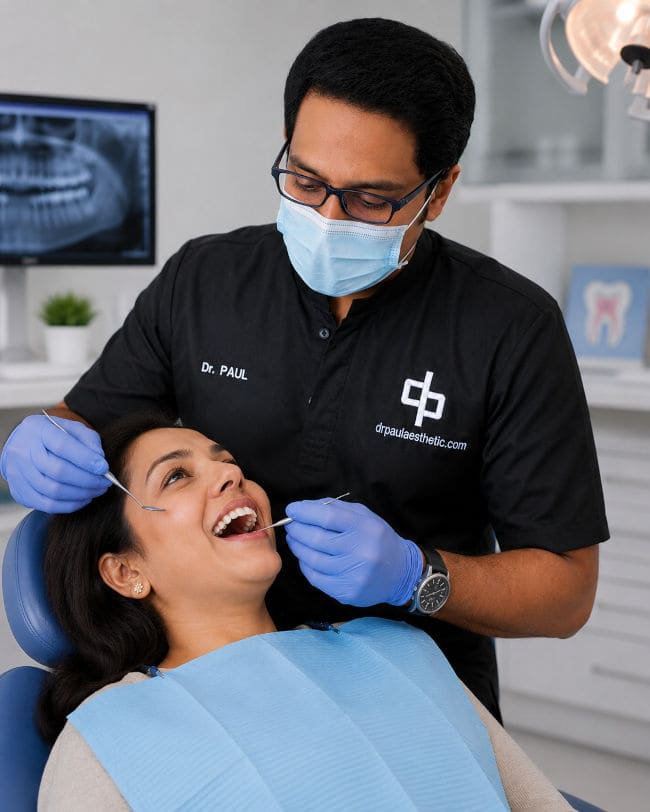
Teeth whitening uses peroxide-based gels to lighten the natural colour of teeth. When supervised by a dentist, the concentration, application and duration are controlled to balance results and comfort.
Whitening only changes natural tooth structure. Existing crowns, veneers and fillings do not lighten, which is why an assessment before whitening is important for anyone with visible dental work.
Who this treatment may suit
- Adults with healthy teeth and gums and generalised yellow or age-related darkening
- Patients preparing for cosmetic treatment who want to set a lighter base shade first
Common concerns it addresses
- Yellowing with age
- Staining from coffee, tea or tobacco
- Wanting a fresher, brighter smile
Suitability can only be confirmed after a clinical examination.
How teeth whitening works
In-clinic whitening applies a higher-strength gel with the gums protected. Home whitening uses custom-made trays and a lower-concentration gel worn for a set period each day. Many patients use a combination.
Some stains, such as those from tetracycline or fluorosis, respond less predictably and may need other approaches.
Consultation and assessment
Dr. Paul will check for decay, gum problems, cracks and existing restorations, record your starting shade, and explain what change is realistic for your teeth. Whitening is not recommended during pregnancy or for anyone under 18 in many jurisdictions.
Treatment stages
- 1
Assessment
Health check, shade record and discussion of expectations.
- 2
Whitening
In-clinic session and/or custom home trays.
- 3
Review
Shade is checked and any restorations that no longer match are discussed.
Potential benefits
- Non-invasive — no tooth structure removed
- Natural-looking lightening of your own teeth
- Can be repeated for maintenance
Risks and limitations
- Temporary tooth sensitivity is common
- Gum irritation if gel contacts soft tissue
- Results vary and are not permanent
- Existing fillings or crowns will not change colour and may need replacing to match
Results vary between individuals and cannot be guaranteed. Your dentist will discuss the risks that apply to you.
Alternative options
- Professional cleaning and polishing for surface stains
- Composite bonding or veneers for stains that do not respond
Aftercare
- Limit strongly coloured foods and drinks for the first 48 hours
- Use a sensitivity toothpaste if advised
- Occasional top-up treatments help maintain results
Frequently asked questions
How long does whitening last?
It varies with diet and habits. Many patients maintain results for a long time with occasional top-ups.
Is whitening safe for enamel?
Dentist-supervised whitening with appropriate products is considered safe for enamel when used as directed.
Where this treatment is available
Dr. Paul sees patients at Lakeshore Aesthetic & Wellness Centre (Al Nahda), Taif Medical Centre (Deira), Dr. Paul Speciality Dental Clinic (Chungam Junction). Please check which location offers this treatment when you contact the clinic.
Further reading
This page is general information and does not replace an individual consultation.