
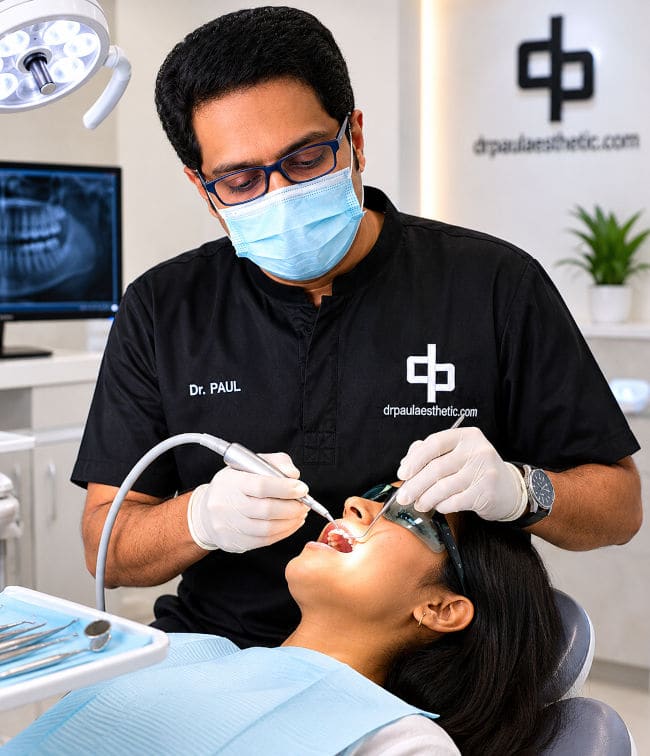
Keeping natural teeth is always the first goal, but sometimes extraction is the most sensible option — for example when a tooth is broken below the gum, severely loosened by gum disease, or has infection that cannot be treated predictably.
A planned extraction considers more than the tooth itself. It looks at how the area will heal, how neighbouring teeth and your bite may be affected, and whether you would like to replace the tooth later.
Who this treatment may suit
- Teeth with extensive decay or fractures that cannot be restored
- Teeth severely affected by advanced gum disease
- Teeth with infection where root canal treatment is not feasible or not chosen
- Teeth removed as part of an orthodontic or prosthetic treatment plan
Common concerns it addresses
- A broken tooth that is painful to bite on
- A very loose tooth
- Recurrent swelling around a tooth
- Crowding requiring space creation, where advised by an orthodontic plan
Suitability can only be confirmed after a clinical examination.
How tooth extraction works
After confirming the diagnosis with an examination and X-ray, the area is numbed with local anaesthetic. The tooth is gently loosened from its socket and removed. Some teeth — particularly those with curved roots or that are broken — may need to be sectioned and removed in parts.
Once the tooth is out, the socket is checked and gauze is placed to help a blood clot form. Stitches are used when needed.
Consultation and assessment
At the consultation Dr. Paul will explain why extraction is being suggested, discuss any realistic ways to save the tooth, review your medical history and medications (such as blood thinners), and talk through options for the space afterwards — before anything is removed.
Treatment stages
- 1
Assessment
Examination, X-ray and medical history review.
- 2
Planning
Discussion of alternatives, risks and future replacement options.
- 3
Extraction
Removal under local anaesthetic, with care to protect surrounding bone and gum.
- 4
Healing review
A follow-up check where needed, and planning for any replacement.
Potential benefits
- Removes a source of pain or infection
- Can protect neighbouring teeth and bone from ongoing infection
- Creates a clear starting point for a long-term replacement plan
Risks and limitations
- Pain, swelling and bruising for a few days
- Dry socket — a painful condition where the blood clot is lost, more common in smokers
- Bleeding, particularly in patients taking anticoagulant medication
- Rarely, nerve irritation causing altered sensation, mostly associated with lower back teeth
- Over time, neighbouring teeth can drift into the gap if it is not managed
Results vary between individuals and cannot be guaranteed. Your dentist will discuss the risks that apply to you.
Alternative options
- Root canal treatment and a crown, where the tooth is restorable
- Gum (periodontal) treatment for teeth loosened by gum disease, where prognosis allows
Aftercare
- Bite on gauze for the recommended time and avoid rinsing vigorously on the first day
- Do not smoke and avoid drinking through a straw while the socket heals
- Eat soft foods and chew on the other side for a few days
- From the next day, gentle warm salt-water rinses can help keep the area clean, unless advised otherwise
Frequently asked questions
How long does healing take?
Soft tissue usually heals over one to two weeks, while the bone continues to remodel over several months.
Should I replace an extracted tooth?
Not always, but gaps can affect chewing, appearance and the position of nearby teeth. Options include implants, bridges and dentures, and the right choice depends on your situation.
Can I go to work after an extraction?
Many people return to normal activities the next day. Avoid strenuous exercise for at least 24 hours.
Where this treatment is available
Dr. Paul sees patients at Lakeshore Aesthetic & Wellness Centre (Al Nahda), Taif Medical Centre (Deira), Dr. Paul Speciality Dental Clinic (Chungam Junction). Please check which location offers this treatment when you contact the clinic.
Further reading
This page is general information and does not replace an individual consultation.