
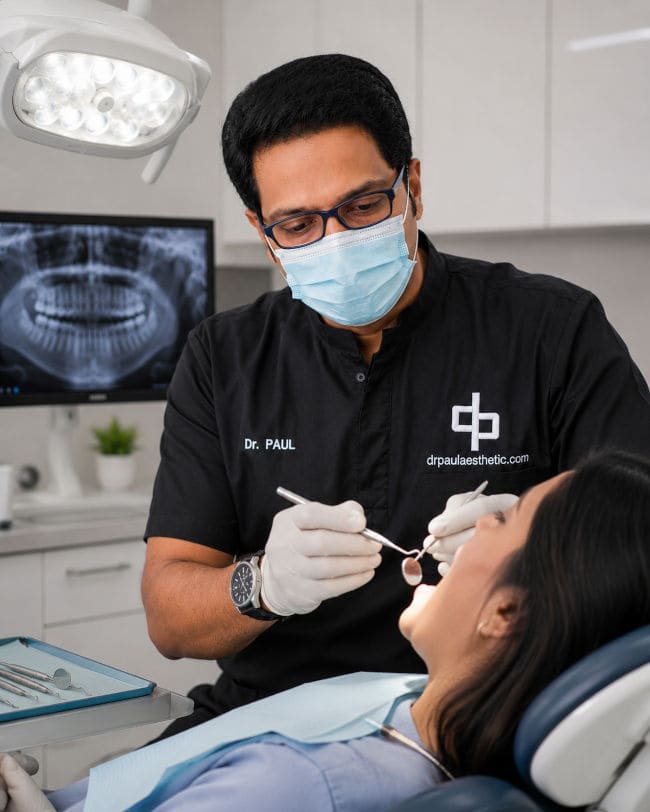
Wisdom teeth are the third molars, usually appearing in the late teens or twenties. Many people have enough space and keep them without trouble. Others have wisdom teeth that are partially erupted or “impacted” against the tooth in front.
Not every wisdom tooth needs to come out. Removal is generally considered when a tooth is causing problems — such as repeated gum infection (pericoronitis), decay that cannot be treated, damage to the neighbouring molar, or cysts.
Who this treatment may suit
- Repeated episodes of pain and swelling around a partly erupted wisdom tooth
- Decay in the wisdom tooth or the molar in front of it
- Food trapping and gum disease that cannot be controlled with cleaning
- Cysts or other pathology identified on X-ray
Common concerns it addresses
- Pain at the back of the jaw
- Swollen gum over a wisdom tooth
- Difficulty opening the mouth fully
- Bad taste or odour from the back of the mouth
Suitability can only be confirmed after a clinical examination.
How wisdom tooth removal works
Removal is planned from an X-ray that shows the tooth’s position, root shape and its relationship to the nerve in the lower jaw. Upper wisdom teeth are often straightforward; lower impacted teeth may need a small gum incision, removal of a little bone, and sectioning of the tooth.
Where imaging suggests a higher-risk position, further 3D imaging or referral to an oral surgeon may be recommended.
Consultation and assessment
The consultation reviews your symptoms and history of flare-ups, examines the area and assesses the X-ray. Dr. Paul will explain whether removal is advisable, the specific risks for your tooth, and whether it is best carried out in the clinic or by a specialist oral surgeon.
Treatment stages
- 1
Assessment
Symptoms, examination and X-ray (with 3D imaging when needed).
- 2
Decision
Removal, monitoring or referral — with the reasons explained.
- 3
Procedure
Removal under local anaesthetic, with stitches when required.
- 4
Recovery
Written aftercare and a review if needed.
Potential benefits
- Stops recurrent infection and pain from a problematic wisdom tooth
- Protects the second molar from decay and bone loss
- Easier cleaning at the back of the mouth
Risks and limitations
- Swelling, bruising and jaw stiffness, typically peaking at two to three days
- Dry socket
- Temporary or, rarely, persistent numbness of the lip, chin or tongue from nerve proximity
- Infection requiring further care
Results vary between individuals and cannot be guaranteed. Your dentist will discuss the risks that apply to you.
Alternative options
- Monitoring of symptom-free wisdom teeth with periodic review
- Managing a single minor flare-up with cleaning and local measures
- Referral to an oral and maxillofacial surgeon for complex cases
Aftercare
- Use cold compresses during the first day to limit swelling
- Eat soft foods and avoid hot drinks while numb
- Avoid smoking and vigorous rinsing for the first 24 hours
- Keep the area clean with gentle rinsing as advised
Frequently asked questions
Should I remove wisdom teeth that are not causing problems?
Guidance in many countries does not recommend routine removal of healthy, symptom-free wisdom teeth. Your dentist will recommend removal only if there is a clinical reason.
How long is recovery?
Most people feel better within a week, though swelling and stiffness are common for the first few days.
Where this treatment is available
Dr. Paul sees patients at Lakeshore Aesthetic & Wellness Centre (Al Nahda), Taif Medical Centre (Deira), Dr. Paul Speciality Dental Clinic (Chungam Junction). Please check which location offers this treatment when you contact the clinic.
Further reading
This page is general information and does not replace an individual consultation.