
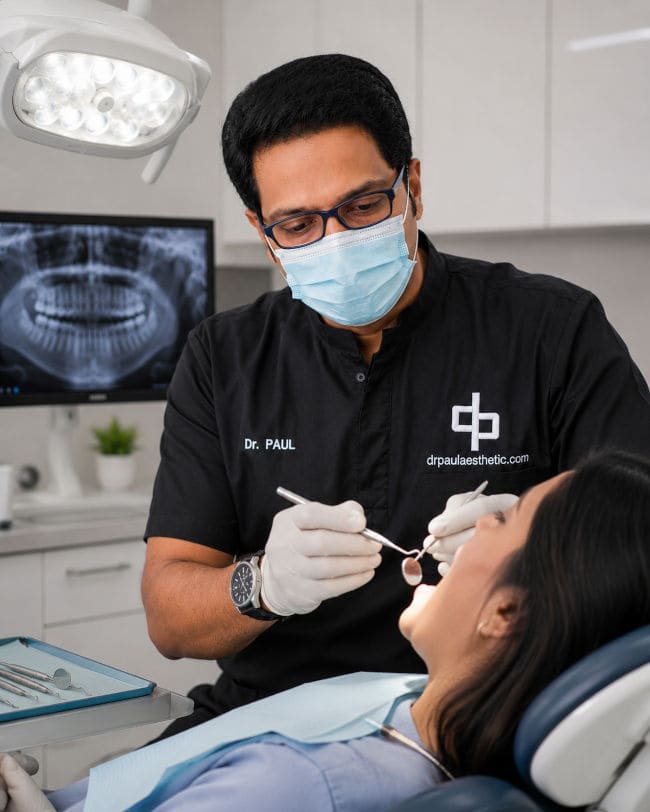
Inside every tooth is the pulp — soft tissue containing nerves and blood vessels. When deep decay, a crack or repeated dental work allows bacteria to reach the pulp, it can become inflamed or infected. Root canal treatment (endodontic treatment) removes that tissue, disinfects the canal system and seals it.
The aim is simple: to relieve pain and keep your natural tooth. A well-treated and properly restored tooth can continue to function for many years.
Who this treatment may suit
- Teeth with lingering pain to hot or cold, or pain that wakes you at night
- Teeth with an abscess, swelling or a gum “pimple” that discharges
- Teeth where decay or a fracture has reached the pulp
- Teeth that have darkened after trauma and show signs of pulp death
Common concerns it addresses
- Persistent or throbbing toothache
- Swelling of the gum or face
- Tenderness when biting
- A previously root-treated tooth that has become painful again
Suitability can only be confirmed after a clinical examination.
How root canal treatment works
The tooth is numbed and isolated, ideally with a rubber dam to keep it clean and dry. An opening is made through the biting surface to reach the pulp chamber.
The canals are located, cleaned and shaped with fine instruments while being irrigated with disinfecting solutions. Once clean, they are filled and sealed. The tooth then needs a durable restoration — often a crown on back teeth — to protect it from fracture.
Consultation and assessment
Diagnosis comes first. Dr. Paul will ask about your symptoms, test how the tooth responds, and take an X-ray to look at the roots and surrounding bone. If root canal treatment is appropriate, he will explain the expected number of visits, the likelihood of success for your particular tooth, and how the tooth will be restored afterwards.
Treatment stages
- 1
Assessment and X-ray
Confirms the diagnosis and shows root shape, length and any infection.
- 2
Cleaning and shaping
Infected tissue is removed and canals are disinfected under local anaesthetic.
- 3
Sealing
Canals are filled and sealed, sometimes after a short interval with a medicated dressing.
- 4
Final restoration
A filling or crown restores strength and seals the tooth against reinfection.
Potential benefits
- Relieves pain caused by pulp inflammation or infection
- Keeps your natural tooth and its root in the jaw
- Avoids the gap and replacement decisions that follow an extraction
Risks and limitations
- Tenderness for a few days after treatment is common
- Some canals are curved, narrow or calcified, which can make treatment more complex
- Instruments can rarely separate inside a canal
- Treatment does not always succeed; some teeth need retreatment, surgery or extraction later
- Root-treated back teeth are more prone to fracture if not protected with a suitable restoration
Results vary between individuals and cannot be guaranteed. Your dentist will discuss the risks that apply to you.
Alternative options
- Extraction, followed by an implant, bridge or denture if replacement is wanted
- In selected cases of reversible inflammation, a protective filling and monitoring
Aftercare
- Avoid chewing hard foods on the tooth until the final restoration is placed
- Take pain relief as advised by your dentist if the tooth feels tender
- Contact the clinic if swelling increases or you develop a fever
- Attend review appointments so healing can be checked on X-ray
Frequently asked questions
Is root canal treatment painful?
The procedure is carried out under local anaesthetic, and most patients find it similar to having a filling. Some tenderness afterwards is normal and usually settles within a few days.
How many visits will I need?
Many teeth are treated in one or two visits. Teeth with severe infection or complex anatomy may need more. Your dentist will give you an estimate after assessment.
Do I need a crown afterwards?
Back teeth often benefit from a crown or similar restoration to reduce the risk of fracture. Front teeth with little missing structure may only need a filling.
Where this treatment is available
Dr. Paul sees patients at Lakeshore Aesthetic & Wellness Centre (Al Nahda), Taif Medical Centre (Deira), Dr. Paul Speciality Dental Clinic (Chungam Junction). Please check which location offers this treatment when you contact the clinic.
Further reading
This page is general information and does not replace an individual consultation.