
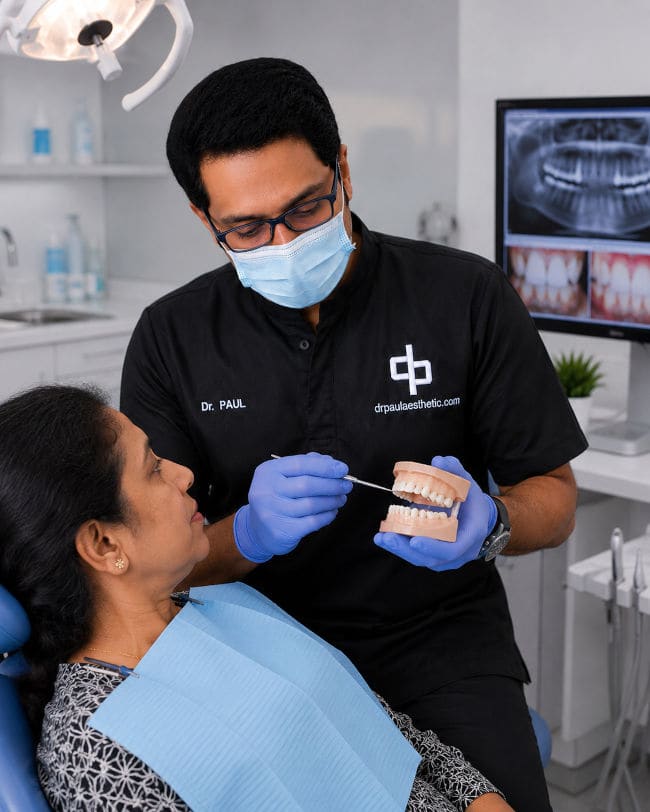
A crown is a restoration that covers the visible part of a tooth. It holds a weakened tooth together, protects it from fracture and restores its shape for chewing and appearance.
Modern crowns are commonly made from all-ceramic materials such as zirconia or lithium disilicate, chosen according to the tooth’s position, the forces it will face, and the aesthetic result needed.
Who this treatment may suit
- Teeth with large fillings and little remaining natural structure
- Back teeth after root canal treatment
- Cracked teeth, where a crown may help hold the tooth together
- Dental implants, which need a crown to replace the visible tooth
- Badly worn or misshapen teeth, as part of a wider plan
Common concerns it addresses
- A tooth that keeps breaking
- A large old filling that has failed
- Pain on biting from a cracked tooth
- A discoloured or poorly shaped tooth
Suitability can only be confirmed after a clinical examination.
How dental crowns works
The tooth is assessed and any decay removed. It is then shaped to make room for the crown material, and an impression or digital scan is taken. A temporary crown protects the tooth while the permanent crown is made by a dental laboratory.
At the fitting appointment the crown is checked for fit, bite and colour, then cemented or bonded in place.
Consultation and assessment
Before recommending a crown, Dr. Paul will check whether a more conservative option, such as an onlay or bonded filling, could do the job. If a crown is the right choice, he will discuss material options, shade, and how long the process takes.
Treatment stages
- 1
Assessment
Examination and X-ray to confirm the tooth is healthy enough to crown.
- 2
Preparation
The tooth is shaped and scanned or impressed; a temporary crown is fitted.
- 3
Laboratory
Your crown is custom-made to the agreed shape and shade.
- 4
Fitting
Fit, bite and appearance are checked before final cementation.
Potential benefits
- Protects weakened teeth from fracture
- Restores chewing function
- Can improve the colour and shape of a tooth
Risks and limitations
- Preparing a tooth for a crown removes healthy tooth structure
- A crowned tooth can still develop decay at its margin
- Some teeth develop sensitivity or, occasionally, need root canal treatment later
- Ceramics can chip, particularly in people who grind their teeth
Results vary between individuals and cannot be guaranteed. Your dentist will discuss the risks that apply to you.
Alternative options
- Onlays or partial-coverage restorations that preserve more tooth structure
- Large bonded composite fillings
- Extraction and replacement, where the tooth cannot be restored predictably
Aftercare
- Clean around the crown margin carefully with a brush and floss or interdental brushes
- Avoid using crowned teeth to open packaging or bite very hard objects
- Ask about a night guard if you grind your teeth
Frequently asked questions
How long do crowns last?
Longevity depends on the material, your oral hygiene, bite forces and habits. Many crowns last many years with good care, but none are permanent.
Will my crown look natural?
Shade and shape are customised to match neighbouring teeth, and all-ceramic materials can look very natural.
Where this treatment is available
Dr. Paul sees patients at Lakeshore Aesthetic & Wellness Centre (Al Nahda), Taif Medical Centre (Deira), Dr. Paul Speciality Dental Clinic (Chungam Junction). Please check which location offers this treatment when you contact the clinic.
Further reading
This page is general information and does not replace an individual consultation.