
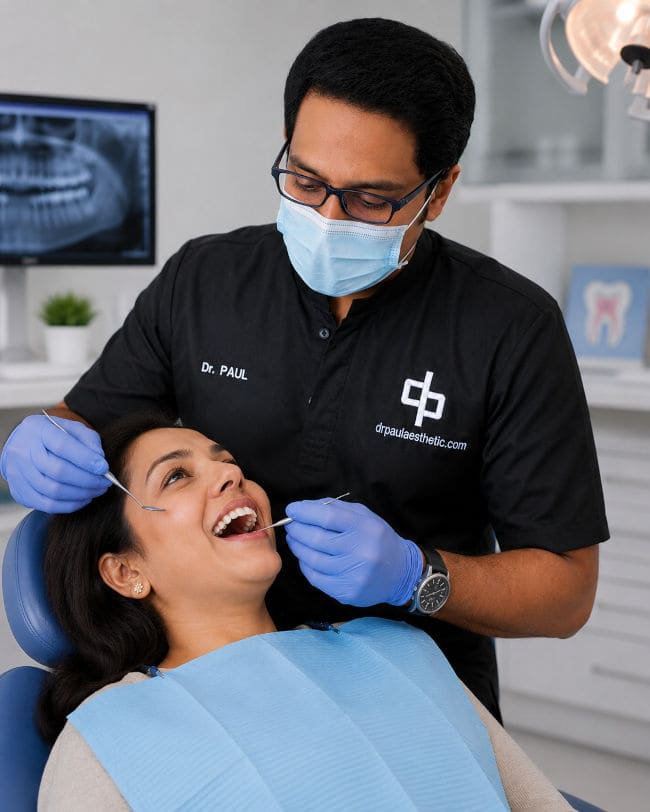
Teeth alignment refers to moving teeth into better positions. Straighter teeth can be easier to clean and can make a smile look more balanced, and alignment is often the most conservative first step before cosmetic work such as veneers.
For suitable adults with mild to moderate crowding or spacing, clear aligners are a popular option. More complex bite problems may need fixed braces or specialist orthodontic care.
Who this treatment may suit
- Mild to moderate crowding or spacing
- Teeth that have shifted after previous orthodontic treatment
- Patients preparing for veneers or crowns who would benefit from better tooth positions first
Common concerns it addresses
- Crooked or overlapping front teeth
- Gaps between teeth
- Relapse after braces in childhood
Suitability can only be confirmed after a clinical examination.
How teeth alignment works
Treatment begins with records — photographs, scans and X-rays. A treatment plan shows the planned movements. Teeth are moved gradually, either by a series of aligners or by braces adjusted over time.
Once teeth reach their final positions, retainers are essential to stop them moving back.
Consultation and assessment
Dr. Paul will check gum and bone health, examine your bite and explain whether your case suits clear aligners, needs fixed braces, or would be best referred to an orthodontic specialist.
Treatment stages
- 1
Records
Scans, photographs and X-rays.
- 2
Plan
A digital plan showing planned tooth movement and estimated duration.
- 3
Active treatment
Aligners or braces, with regular progress checks.
- 4
Retention
Retainers to maintain the result.
Potential benefits
- Conservative — moves teeth rather than reshaping them
- Can make cleaning easier
- Can reduce the amount of tooth reduction needed for later cosmetic work
Risks and limitations
- Results depend heavily on wearing aligners or retainers as instructed
- Temporary discomfort when new aligners or adjustments are started
- Root shortening (resorption) and gum recession can occur in some orthodontic cases
- Teeth will tend to move back without long-term retention
Results vary between individuals and cannot be guaranteed. Your dentist will discuss the risks that apply to you.
Alternative options
- Clear aligners
- Fixed braces
- Veneers or bonding for very minor irregularities (not a substitute for alignment)
Aftercare
- Wear retainers exactly as instructed — often long term
- Keep aligners and retainers clean
- Attend retainer review appointments
Frequently asked questions
Am I too old for teeth straightening?
There is no upper age limit for orthodontic tooth movement as long as gums and bone are healthy.
How long does treatment take?
Simple cases may take a few months; more complex movements take longer. You will receive an estimate after records are reviewed.
Where this treatment is available
Dr. Paul sees patients at Lakeshore Aesthetic & Wellness Centre (Al Nahda), Taif Medical Centre (Deira), Dr. Paul Speciality Dental Clinic (Chungam Junction). Please check which location offers this treatment when you contact the clinic.
Further reading
This page is general information and does not replace an individual consultation.