Missing teeth can affect chewing, speech, appearance and the position of remaining teeth. There is no single best replacement — the right choice depends on the number and position of missing teeth, bone, gum health, general health and personal preference.
Who this treatment may suit
- Patients with one, several or all teeth missing
- People unhappy with an existing denture or bridge
Common concerns it addresses
- Gaps in the smile
- Chewing on one side
- Shifting teeth
Suitability can only be confirmed after a clinical examination.
How missing teeth replacement works
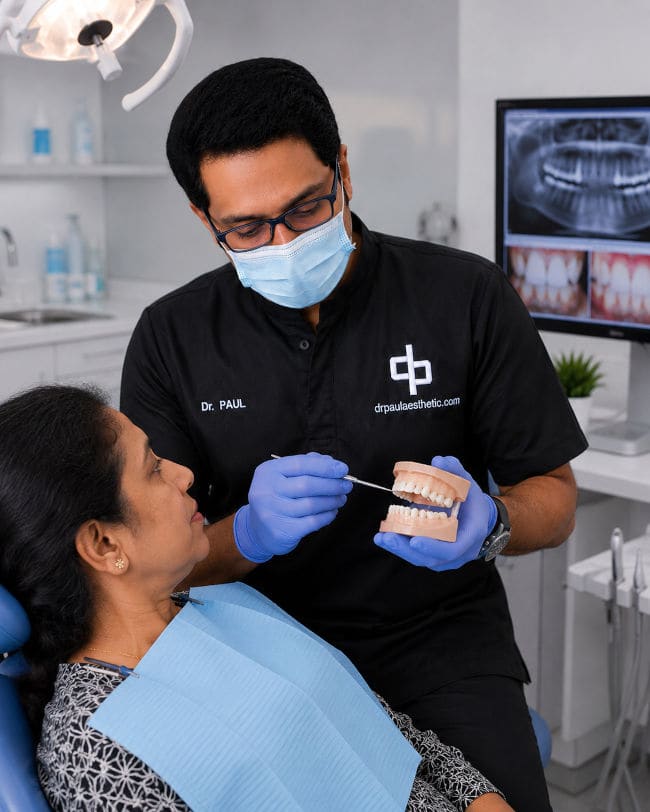
Implants replace the root and support fixed teeth. Bridges use neighbouring teeth as support. Dentures are removable and can replace many teeth at lower complexity. Implant-retained dentures combine stability with removability.
Consultation and assessment
Dr. Paul will compare options for your specific gap, explaining treatment time, maintenance and how each affects other teeth.
Treatment stages
- 1
Assessment
Examination and imaging.
- 2
Option comparison
Implants, bridges and dentures discussed.
- 3
Treatment
Chosen replacement completed in planned stages.
Potential benefits
- Restored chewing and appearance
- Helps stabilise remaining teeth
Risks and limitations
- Each option carries its own risks — see individual treatment pages
Results vary between individuals and cannot be guaranteed. Your dentist will discuss the risks that apply to you.
Alternative options
- Leaving a gap, where it causes no functional problem
Aftercare
- Specific to the chosen replacement
Frequently asked questions
What is the most natural-feeling replacement?
Many patients find implant-supported teeth feel closest to natural, but suitability varies.
Where this treatment is available
Dr. Paul sees patients at Lakeshore Aesthetic & Wellness Centre (Al Nahda), Taif Medical Centre (Deira), Dr. Paul Speciality Dental Clinic (Chungam Junction). Please check which location offers this treatment when you contact the clinic.