Porcelain (ceramic) veneers are made in a dental laboratory from materials such as feldspathic porcelain or lithium disilicate. Ceramics reflect light similarly to enamel and resist staining well.
Because they are custom-made, porcelain veneers usually need two or more appointments and some degree of tooth preparation.
Who this treatment may suit
- Patients wanting a durable, stain-resistant cosmetic change
- Teeth with intrinsic discolouration
- Worn or chipped front teeth
Common concerns it addresses
- Long-standing staining
- Uneven tooth shapes
- Desire for a long-lasting colour change
Suitability can only be confirmed after a clinical examination.
How porcelain veneers works
Following a smile design, teeth are prepared and scanned. A ceramist creates the veneers to the agreed shape and shade. At the fit appointment, each veneer is checked, then bonded with resin cement.
Consultation and assessment
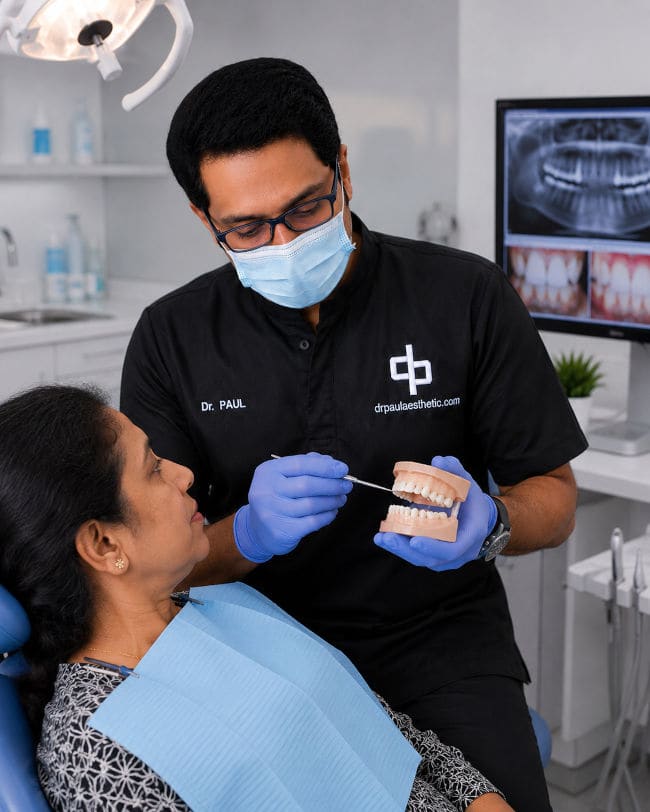
The consultation compares porcelain with composite in terms of preparation, durability, repairability and cost factors, so you can decide with full information.
Treatment stages
- 1
Design
Smile planning and mock-up.
- 2
Preparation and scan
Conservative shaping and temporary veneers.
- 3
Ceramic fabrication
Laboratory-crafted veneers.
- 4
Bonding
Try-in, shade confirmation and bonding.
Potential benefits
- High stain resistance
- Lifelike optical properties
- Good long-term colour stability
Risks and limitations
- Irreversible enamel removal
- Can fracture and are harder to repair than composite
- Replacement eventually needed
Results vary between individuals and cannot be guaranteed. Your dentist will discuss the risks that apply to you.
Alternative options
- Composite veneers
- Whitening
- Ultraneers or minimal-prep veneers where suitable
Aftercare
- Normal brushing with non-abrasive toothpaste
- Night guard if advised
- Regular reviews
Frequently asked questions
Are porcelain veneers better than composite?
Porcelain typically resists staining better and may last longer; composite is less invasive and easier to repair. The right option depends on your situation.
Where this treatment is available
Dr. Paul sees patients at Lakeshore Aesthetic & Wellness Centre (Al Nahda), Taif Medical Centre (Deira), Dr. Paul Speciality Dental Clinic (Chungam Junction). Please check which location offers this treatment when you contact the clinic.
Further reading
This page is general information and does not replace an individual consultation.