A child's first visit to the dentist sets the tone for future visits. With a little preparation, it can be a positive, even enjoyable, experience — and the start of lifelong healthy habits.
The short answer
Many dental associations recommend a first dental visit when the first tooth appears or by the first birthday. Keep the experience positive, short and familiar, and use it to learn about home care and prevention.
Why visit so early?
Early visits help:
- Check that teeth are developing normally
- Identify early signs of decay
- Give parents advice on brushing, fluoride, diet and habits
- Help children become familiar with the dental environment before any treatment is needed
Preparing your child
- Talk positively. Describe the dentist as someone who helps keep teeth healthy.
- Read books or watch videos about visiting the dentist.
- Play dentist at home — count teeth with a toothbrush.
- Avoid negative words like "hurt", "needle" or "pain".
- Choose a good time — when your child is rested and fed, not near nap time.
- Stay calm yourself. Children pick up on adult anxiety.
What happens at the visit
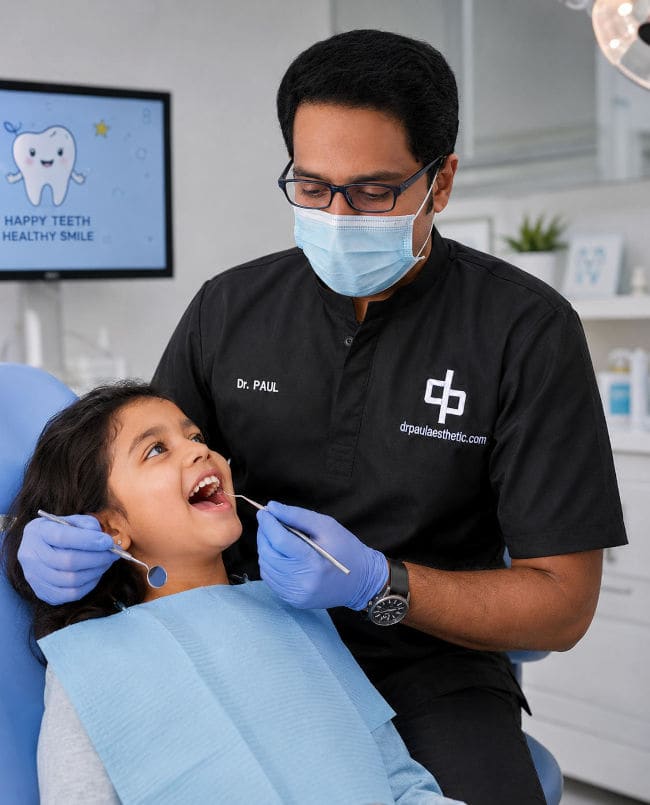
A first visit is usually short and gentle:
- The dentist may examine your child's teeth while they sit on your lap
- Teeth are counted and checked for decay
- Gums, bite and development are assessed
- You receive advice on brushing, toothpaste, diet and habits
Home care tips
Brushing
- Start brushing as soon as the first tooth appears
- Brush twice a day with fluoride toothpaste
- Commonly recommended amounts are a smear for under-threes and a pea-sized amount for ages three to six
- Supervise brushing until around age 7–8
Diet
- Avoid putting babies to bed with bottles of milk or juice
- Limit sugary snacks and drinks between meals
- Offer water between meals
Habits
Most children stop thumb-sucking or dummy use naturally. Ask your dentist if you are concerned.
Common concerns
- Teething: teething rings and gentle gum massage can help
- White or brown spots: may indicate early decay
- Injuries: see a dentist if a tooth is knocked, loose or chipped
Regular visits
Your dentist will recommend how often your child should return, depending on their risk of decay.
Conclusion
A positive first visit helps children feel comfortable with dental care for life. Learn more about our pediatric dentistry or book your child's first visit.
Sources and further reading
Have a question about your own teeth?
Dr. George Paul can assess your situation and explain the options that suit you.
Request a consultation