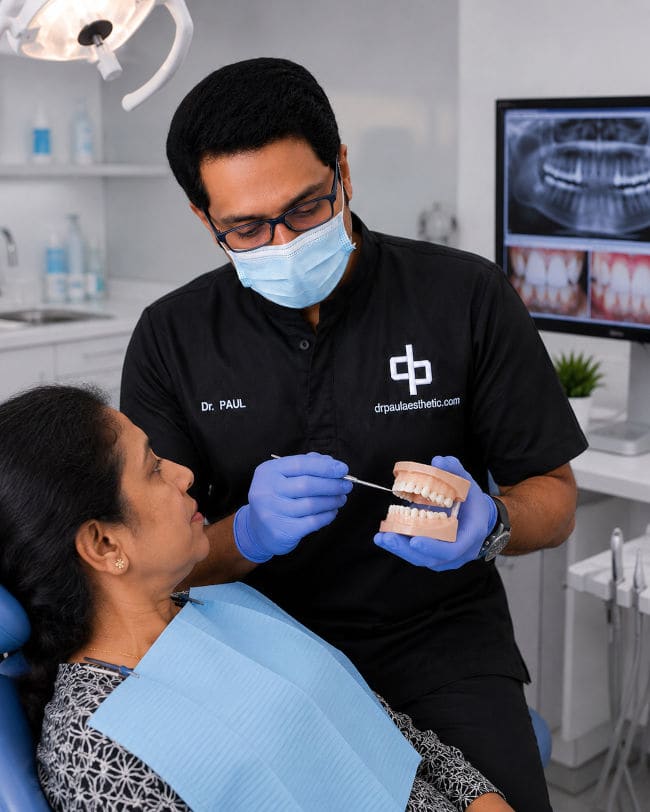
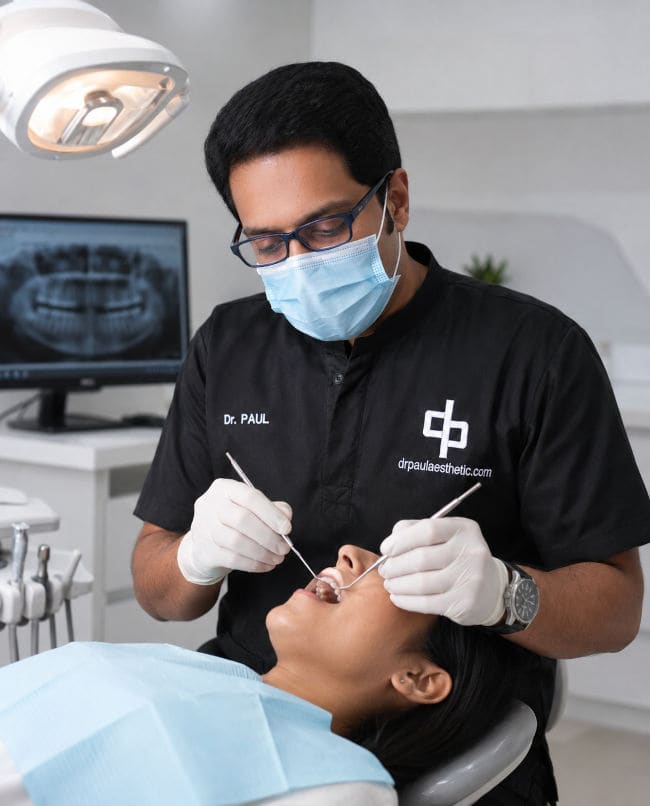
Whether it has been a while since your last dental visit or you are new to a clinic, knowing what will happen at your first consultation can make it easier — especially if you feel a little anxious.
The short answer
Expect a discussion of your concerns and medical history, an examination of your teeth, gums and mouth, X-rays if needed, a clear explanation of findings, and a plan for next steps.
Before you arrive
Bring:
- A list of medications and supplements you take
- Details of medical conditions and allergies
- Your Emirates ID or passport, and insurance card if applicable
- Previous dental records or X-rays, if available
- A list of questions
Arrive a few minutes early to complete any registration forms.
The conversation
Your dentist will ask:
- Why you have come in — a check-up, a specific problem, or a treatment you are considering
- Whether you have pain, sensitivity or other symptoms
- About past dental experiences and any anxiety
- About your goals for your teeth
This is your chance to explain what matters to you.
Medical history
Many medical conditions and medications affect dental care — for example, blood thinners, diabetes, heart conditions, pregnancy and bone medications. Being open helps your dentist plan safely.
The examination
Your dentist will examine:
- Teeth: decay, cracks, wear and existing restorations
- Gums: inflammation, bleeding and pocket depths
- Bite: how your teeth meet
- Jaw joints and muscles: signs of strain or grinding
- Soft tissues: tongue, cheeks, palate and floor of the mouth
X-rays
X-rays are taken only when there is a clinical reason, such as to check for decay between teeth or problems at root tips. Modern dental X-rays involve a low dose of radiation.
Findings and plan
Your dentist should explain what they found and group recommendations into:
- Urgent care — pain, infection or problems that could worsen quickly
- Recommended care — treatment that is advisable but not urgent
- Optional care — for example, cosmetic improvements
You should receive information about costs and be given time to decide.
If you are anxious
Tell the team. Ways to make visits easier include:
- Agreeing a signal to pause
- Shorter appointments
- Explaining each step before it happens
After the visit
You may leave with a treatment plan, an estimate, advice on home care and a recommended interval for your next check-up.
Conclusion
A first consultation is about understanding your oral health and your goals. It should leave you informed and comfortable about next steps. Book your first consultation or read Why Regular Dental Checkups Matter.
Sources and further reading
Have a question about your own teeth?
Dr. George Paul can assess your situation and explain the options that suit you.
Request a consultation