Crowns and bridges are often mentioned together, and they use similar materials and techniques. They solve different problems, though. Understanding the difference helps you follow your dentist's recommendations.
The short answer
A crown covers and protects a single damaged tooth. A bridge replaces one or more missing teeth by attaching false teeth to crowns on neighbouring teeth or implants.
What is a crown?
A crown is a cap that covers the visible part of a tooth. It holds a weakened tooth together, protects it from fracture and restores its shape, function and appearance.
When crowns are used
- Teeth with large fillings and little remaining structure
- Back teeth after root canal treatment
- Cracked teeth
- Badly worn or broken teeth
- On top of dental implants
- As part of cosmetic treatment for heavily restored teeth
What is a bridge?
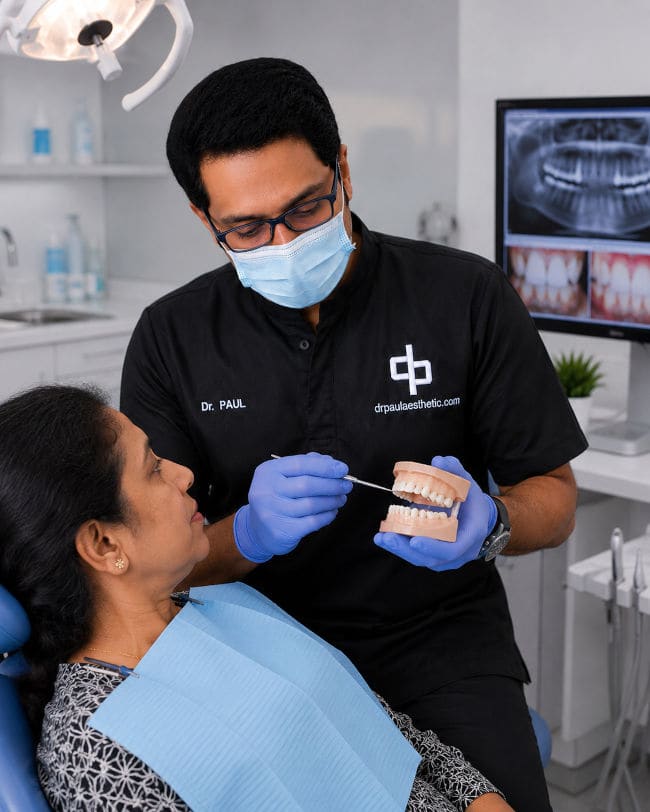
A bridge replaces missing teeth. It is a single restoration made of a false tooth (pontic) attached to supporting crowns or wings.
Types of bridges
- Conventional bridge: crowns on the teeth either side of the gap support the false tooth.
- Adhesive (resin-bonded) bridge: a thin wing bonded to the back of a neighbouring tooth supports the false tooth, with minimal preparation.
- Cantilever bridge: supported on one side only, used in specific situations.
- Implant-supported bridge: implants rather than natural teeth support the bridge.
Key differences
| Crown | Bridge | |
|---|---|---|
| Purpose | Restore one damaged tooth | Replace missing teeth |
| Supported by | The tooth itself (or an implant) | Neighbouring teeth or implants |
| Cleaning | Like a natural tooth | Requires cleaning under the false tooth |
Materials
Both are commonly made from:
- Zirconia — strong and suitable for back teeth
- Lithium disilicate — highly aesthetic, suitable for many front and back teeth
- Porcelain fused to metal — a traditional, durable option
Your dentist selects material based on position, bite forces and appearance.
The process
Both usually involve:
- Examination and X-rays
- Preparing the tooth or teeth
- A digital scan or impression
- A temporary crown or bridge
- Laboratory fabrication
- Fitting, bite adjustment and cementation
Care and maintenance
- Brush twice daily and clean carefully at the gum line
- For bridges, clean under the false tooth with superfloss, interdental brushes or a water flosser
- Avoid biting very hard objects
- Attend regular reviews
Crowned and bridge-supporting teeth can still decay at the margins, so hygiene matters.
Crowns, bridges or implants?
If you are missing a tooth, a bridge is one option alongside implants and dentures. See Dental Implants vs Dental Bridges.
Conclusion
Crowns restore damaged teeth; bridges replace missing ones. Your dentist will recommend the option that best protects your long-term oral health. Learn more about dental crowns and dental bridges.
Have a question about your own teeth?
Dr. George Paul can assess your situation and explain the options that suit you.
Request a consultation