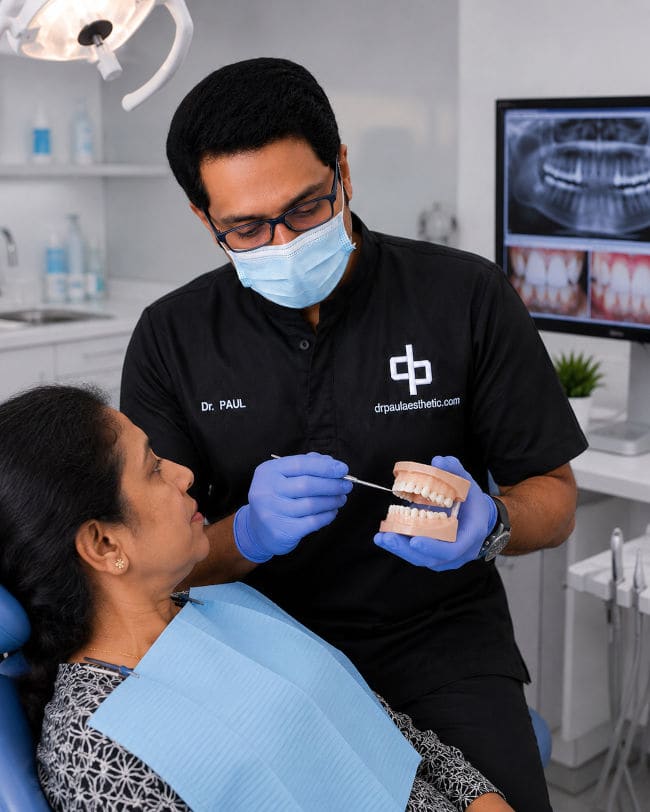
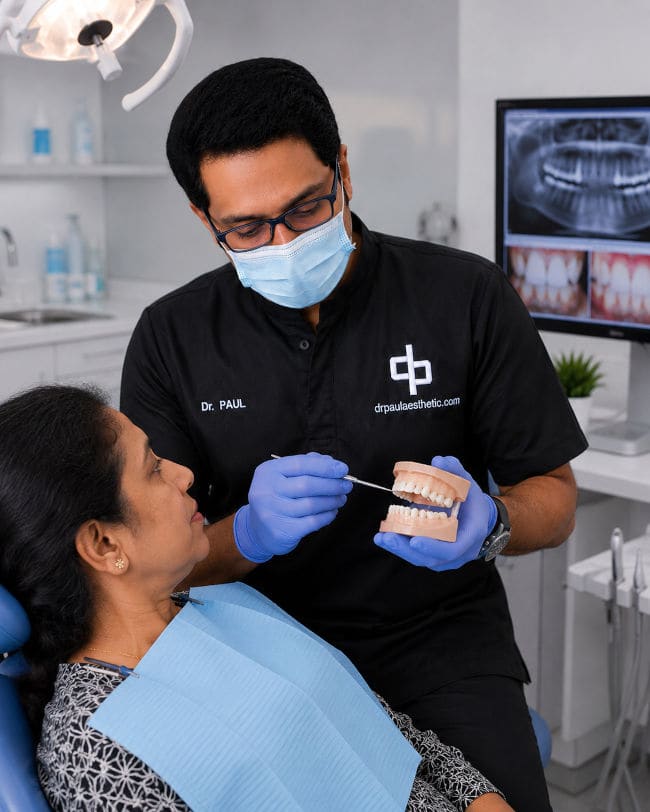
Dental implants are a widely used way to replace missing teeth. They can restore chewing, support a natural-looking smile and avoid involving neighbouring teeth. They also involve surgery, healing time and long-term maintenance, so it is worth understanding the whole process before you begin.
The short answer
A dental implant is a small post — usually titanium — placed in the jawbone to replace a tooth root. After it integrates with the bone, it supports a crown, bridge or denture. Suitability depends on bone volume, gum health and general health, and is assessed individually.
How implants work
An implant restoration has three parts:
- The implant — a screw-shaped post placed in the jawbone.
- The abutment — a connector that links the implant to the visible tooth.
- The restoration — the crown, bridge or denture you see and chew with.
Over several weeks to months, bone grows onto the implant surface in a process called osseointegration. This creates a stable foundation that can withstand chewing forces.
What implants can replace
- A single missing tooth, with an implant-supported crown
- Several missing teeth, with individual implants or an implant-supported bridge
- All teeth in an arch, with an implant-supported fixed bridge or an implant-retained denture
Who may be suitable?
Many adults with missing teeth can be considered. Factors that need careful assessment include:
- Smoking, which is associated with higher failure rates
- Diabetes, especially if poorly controlled
- Certain medications that affect bone, such as some osteoporosis and cancer treatments
- Previous radiotherapy to the head and neck
- Gum disease, which must be treated first
- Bone volume, which may need grafting
Read Who May Be Suitable for Dental Implants?.
The assessment
A thorough implant assessment includes:
- A full medical history, including medications
- Examination of the gap, neighbouring teeth, gums and bite
- 3D imaging (CBCT) to measure bone height and width and to locate nerves and sinuses
- Discussion of alternatives, timeline and costs
See What Happens During a Dental Implant Consultation?.
Treatment stages
Preparation
Some patients need extractions, gum treatment or bone grafting before implants can be placed.
Implant placement
Under local anaesthetic, a small opening is made in the gum, a precise channel is prepared in the bone, and the implant is placed. The gum may be closed over it or a healing cap left visible.
Healing
Osseointegration usually takes a few months. A temporary tooth or denture can often be worn during this time so you are not left with a visible gap.
Restoration
Once the implant is stable, a scan or impression is taken and the final crown, bridge or denture is made and fitted.
How long does it take?
Often three to six months from placement to final tooth, longer if bone grafting or extractions are needed. In selected cases, a temporary tooth can be attached soon after placement. See How Long Does Dental Implant Treatment Take?.
What does it feel like?
Placement is carried out under local anaesthetic. Afterwards, swelling, bruising and discomfort for a few days are common and are usually managed with standard pain relief.
Risks
Implant treatment is generally predictable when carefully planned, but risks include:
- Pain, swelling, bruising and bleeding after surgery
- Infection
- Failure of the implant to integrate
- Nerve injury causing altered sensation, or sinus involvement in the upper jaw — rare with careful 3D planning
- Peri-implantitis — inflammation and bone loss around the implant over time
- Mechanical complications such as loosened screws or chipped crowns
Aftercare
Implants cannot decay, but the gum and bone around them can become inflamed. Daily cleaning and regular reviews are essential. See Dental Implant Aftercare.
Alternatives
Bridges and dentures remain valid options. See Dental Implants vs Dental Bridges.
Choosing an implant provider
Ask about:
- The clinician's training and experience in implant dentistry
- How planning is carried out, including 3D imaging
- Which implant system is used and whether parts are widely available
- What follow-up and maintenance are included
Dr. George Paul holds a Fellowship in Oral Implantology and has advanced training in dental implants.
Conclusion
Implants can restore function and confidence when they are carefully planned and well maintained. If you are considering implants in Dubai, an assessment will show whether they suit you and what treatment would involve. Book an implant consultation.
Frequently asked questions
Is implant surgery painful?
It is done under local anaesthetic. Most patients report manageable discomfort afterwards.
Can I get an implant immediately after an extraction?
Sometimes. Immediate placement depends on bone and infection status.
Sources and further reading
Have a question about your own teeth?
Dr. George Paul can assess your situation and explain the options that suit you.
Request a consultation