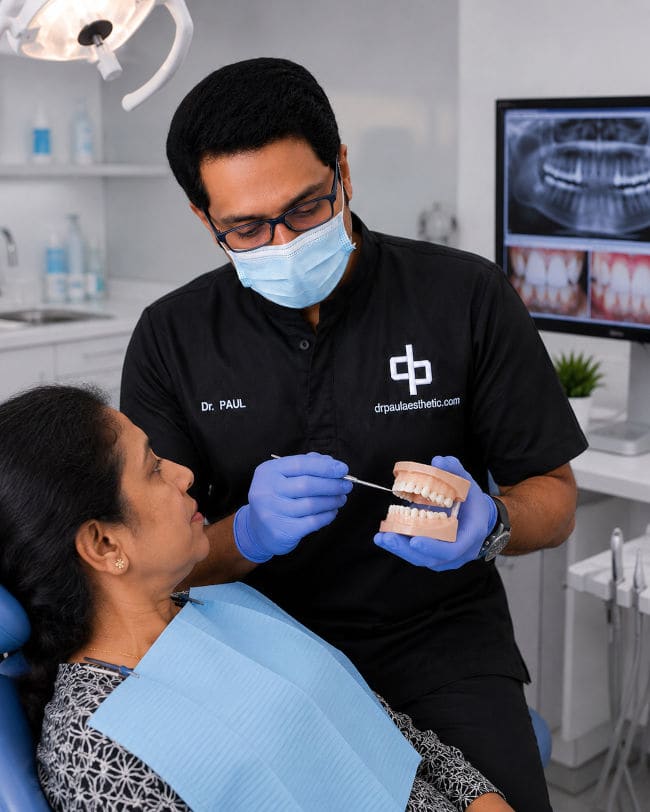
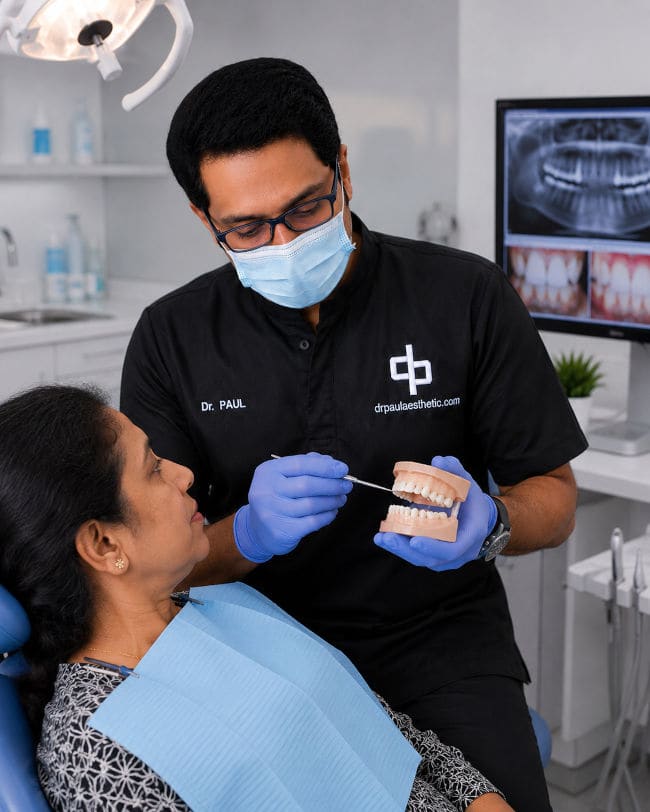
An implant consultation is your opportunity to find out whether implants are suitable for you, what treatment would involve and what alternatives exist — without any obligation to proceed. Knowing what to expect helps you prepare and get clear answers.
The short answer
An implant consultation reviews your medical history, examines the gap and surrounding teeth, assesses bone (often with 3D imaging), and explains your options, the treatment timeline, risks and an estimate of costs.
1. Your goals and concerns
Your dentist will ask which teeth are missing, how long they have been missing, how the gap affects you, and what you hope to achieve. If you wear a denture, they will ask about comfort and stability.
2. Medical history
Implant treatment involves minor surgery and healing, so your general health matters. Expect questions about:
- Smoking or tobacco use
- Diabetes and how well it is controlled
- Medications, particularly blood thinners and medications that affect bone (such as some osteoporosis or cancer treatments)
- Previous radiotherapy to the head or neck
- Other conditions affecting healing or immunity
Be open — this information helps your dentist plan safely.
3. Clinical examination
The dentist examines:
- The gap: the width of space and the shape of the gum and bone
- Neighbouring teeth: their health and position
- Gums: signs of gum disease, which must be treated first
- Bite: how opposing teeth meet the space
- Signs of grinding, which affects implant planning
4. Imaging
A standard X-ray may be taken initially. For detailed planning, a 3D cone-beam CT (CBCT) scan shows:
- Bone height and width
- Bone quality
- The position of nerves in the lower jaw
- The position of the sinuses in the upper jaw
This allows the implant position to be planned precisely and helps identify whether bone grafting may be needed.
5. Discussion of options
Your dentist should explain all suitable options, not just implants:
- Single implant with a crown
- Implant-supported bridge
- Implant-retained denture
- Conventional or adhesive bridge
- Removable partial denture
- Leaving the gap, if appropriate
See Dental Implants vs Dental Bridges.
6. Treatment plan, timeline and estimate
If implants are suitable, you should receive:
- The proposed number and position of implants
- Whether grafting is needed
- What you will have during healing
- An estimated timeline — see How Long Does Dental Implant Treatment Take?
- An itemised estimate
Questions to ask
- Am I a suitable candidate, and are there any risk factors?
- Will I need bone grafting or a sinus lift?
- Which implant system will be used?
- What will I have to wear during healing?
- What are the main risks for me?
- What maintenance will be needed long term?
- What does the estimate include?
What to bring
- A list of medications and medical conditions
- Previous dental X-rays or scans
- Details of any previous implant or dental treatment
- Your questions written down
Conclusion
A thorough consultation gives you the information to decide confidently. Dr. George Paul, who holds a Fellowship in Oral Implantology, offers dedicated implant consultations. Learn more or request an appointment.
Sources and further reading
Have a question about your own teeth?
Dr. George Paul can assess your situation and explain the options that suit you.
Request a consultation