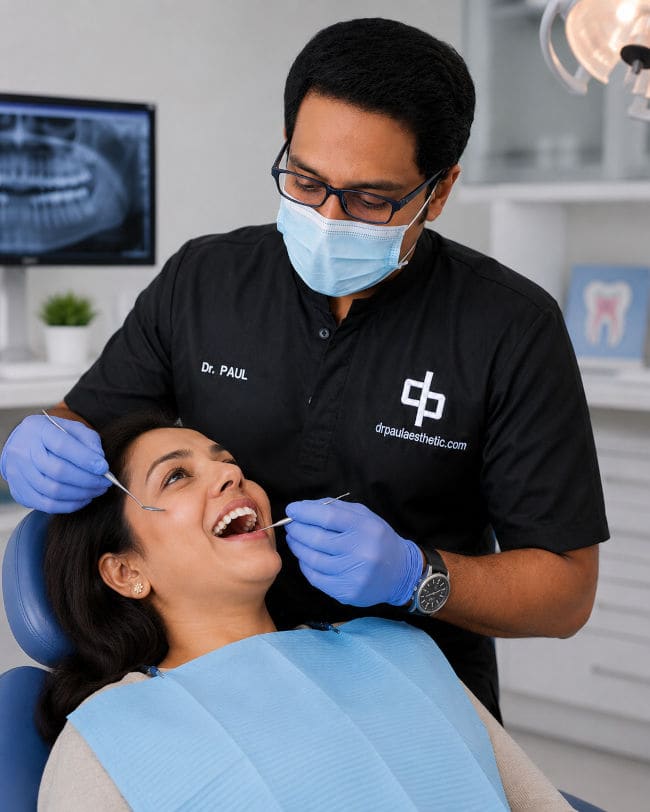
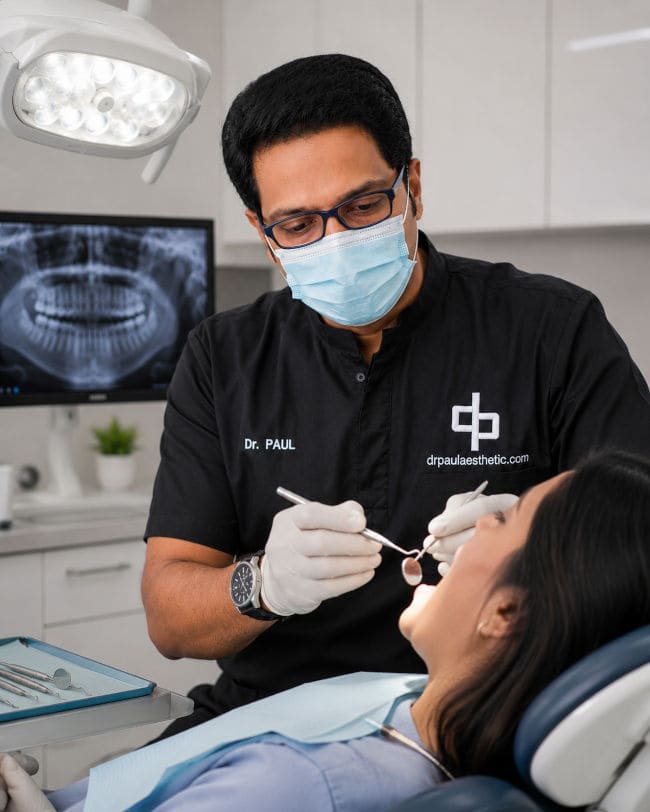
Clear aligners are made from a digital treatment plan that maps every stage of tooth movement. The quality of that plan — and the clinical judgement behind it — has a major influence on the result.
The short answer
Aligner planning involves a health check, records (scans, photos and X-rays), a digital simulation of tooth movement reviewed and adjusted by the clinician, and a retention plan.
Step 1: Oral health check
Teeth and gums must be healthy before tooth movement begins. Decay should be treated and gum inflammation controlled. Moving teeth in the presence of active gum disease can accelerate bone loss.
Step 2: Records
- An intraoral scan creates a 3D model of your teeth
- Photographs record your face and smile
- X-rays check roots and bone levels
Step 3: Defining goals
Are you aiming to align the front teeth only, improve the bite, or prepare for cosmetic work such as veneers? Goals shape the plan.
Step 4: The digital simulation
Software shows proposed movements stage by stage. The clinician reviews and adjusts tooth positions, the order of movement and the use of attachments or small amounts of enamel reduction (interproximal reduction) to create space.
Step 5: Reviewing the plan with you
You should see the planned end result and understand the estimated number of aligners and duration.
Step 6: Treatment and monitoring
Regular reviews check that teeth are "tracking". If they are not, refinement aligners may be needed.
Step 7: Retention
Retainers are planned from the start. See Why Retainers Matter.
Conclusion
A digital plan is a powerful tool, but it requires clinical judgement and consistent wear. Clear aligners at Dr Paul Aesthetic.
Frequently asked questions
What is interproximal reduction?
A controlled polishing of small amounts of enamel between teeth to create space for alignment.
Sources and further reading
Have a question about your own teeth?
Dr. George Paul can assess your situation and explain the options that suit you.
Request a consultation