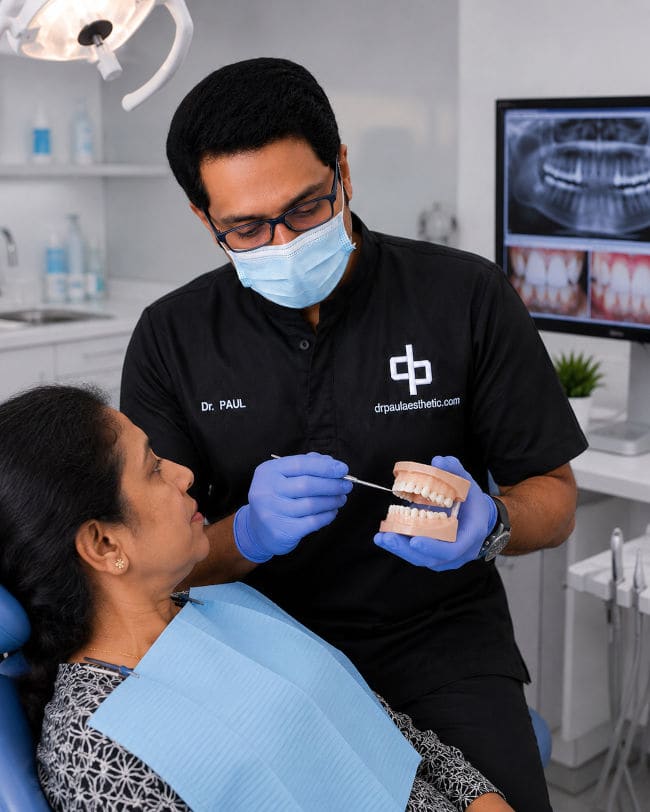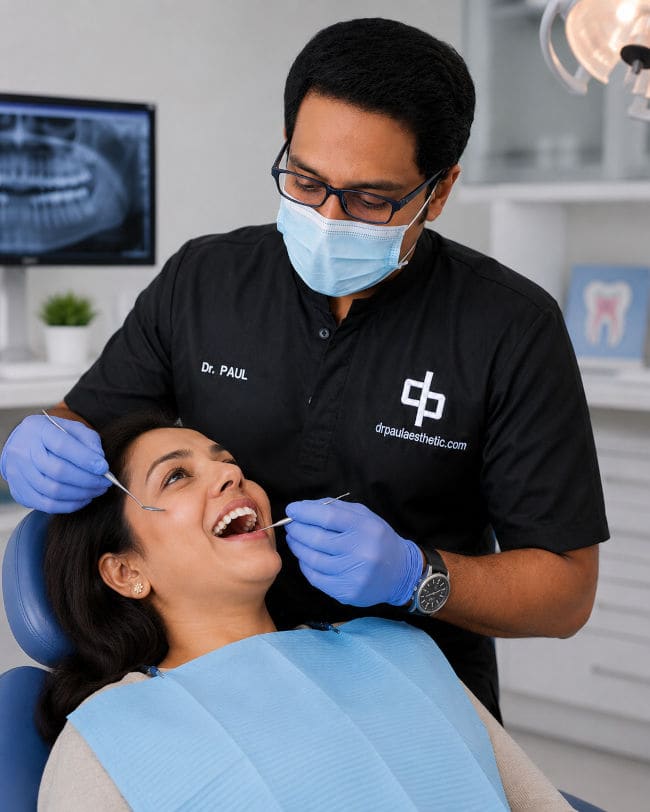
Dental veneers are thin coverings bonded to the front surface of teeth. They are one of the most requested cosmetic treatments in Dubai because they can change several things at once — colour, shape, length and the appearance of small gaps or chips. They are also a treatment where careful planning matters, because many veneer techniques involve permanently reshaping enamel.
This guide explains the main types of veneers, the typical treatment process, and the considerations worth discussing with your dentist before you decide.
What exactly is a veneer?
A veneer is a thin layer of tooth-coloured material — porcelain or composite resin — that is bonded to the visible front surface of a tooth. It does not cover the whole tooth the way a crown does. Because veneers are bonded rather than simply cemented, they rely on healthy enamel for a strong, lasting attachment.
Veneers are mostly used on the front teeth visible when you smile. They are not designed to repair heavily broken or decayed teeth; those often need crowns or other restorations.
The main types of veneers
Porcelain (ceramic) veneers
Porcelain veneers are made in a dental laboratory from ceramic materials. They are valued for their stain resistance, colour stability and the way they reflect light similarly to natural enamel. They usually require some tooth preparation and at least two appointments. Read more on our porcelain veneers page.
Composite veneers
Composite veneers are built directly onto the tooth using tooth-coloured resin, shaped and polished by the dentist. They often need little or no enamel removal and can usually be completed in one visit. They are easier to repair but more prone to staining and wear than porcelain. We compare the two in detail in Porcelain vs Composite Veneers.
Ultra-thin and minimal-preparation veneers
Ultra-thin ceramic veneers, sometimes marketed under names such as Ultraneers, aim to preserve as much enamel as possible. They work best when teeth need to be built out slightly — for example small or worn teeth — rather than when dark colours need masking. See Ultraneers and Traditional Veneers.
The treatment process, step by step
1. Consultation and assessment
Your dentist examines your teeth, gums and bite and asks what you would like to change. Decay and gum inflammation need to be treated first. This is also the moment to discuss whether whitening or alignment could achieve some of your goals more conservatively.
2. Smile design and mock-up
Photographs and scans are used to plan the shape and proportion of the new teeth. Many clinicians create a trial "mock-up" in temporary material that is placed over your teeth, so you can see and feel the proposed shapes before any irreversible step.
3. Preparation
Where needed, a small amount of enamel is removed so that the veneer sits naturally without looking bulky. The amount depends on the starting position and colour of your teeth and the material chosen. Temporary veneers may be placed while the laboratory makes the final ones.
4. Fitting and bonding
Each veneer is tried in to check fit, shade and appearance. Once you and your dentist are satisfied, the teeth are cleaned and conditioned and the veneers are bonded. The bite is checked carefully afterwards.
5. Review
A follow-up visit lets your dentist check the gums around the veneers and make any small adjustments.
Important considerations
- Irreversibility. If enamel is removed, that tooth will always need some form of covering in future.
- Maintenance. Veneers can chip, debond or need replacement over time. They are a long-term commitment, not a one-off procedure.
- Bite and habits. Grinding, clenching, nail biting and using teeth as tools increase the risk of damage. A night guard may be recommended.
- Gum health. Healthy gums before and after treatment are essential to a natural appearance.
- Natural vs very white. Extremely white, uniform shades can look artificial on some faces. Take time to discuss shade.
- Number of teeth. It is not always necessary to treat every visible tooth. Ask why each tooth is included.
Are veneers the right choice for you?
Veneers can be an excellent option for discoloured, worn or misshapen front teeth when the teeth and gums are healthy. They are less suitable for people with active gum disease, heavy grinding without protection, or teeth with large existing restorations. Our article Are Dental Veneers Suitable for Everyone? covers this in more depth.
Conclusion
Veneers are a powerful cosmetic tool, but the best results come from thorough planning, honest discussion of alternatives and good long-term care. If you are considering veneers in Dubai, a consultation with Dr. George Paul can help you understand whether they suit your teeth and what results are realistic.
Frequently asked questions
How many appointments do veneers take?
Composite veneers can often be completed in a single visit. Porcelain veneers typically need at least two to three appointments over a few weeks.
Can veneers be removed?
Veneers can be replaced, but if enamel was prepared, the tooth will need a new covering — it cannot return to its original state.
Sources and further reading
Have a question about your own teeth?
Dr. George Paul can assess your situation and explain the options that suit you.
Request a consultation