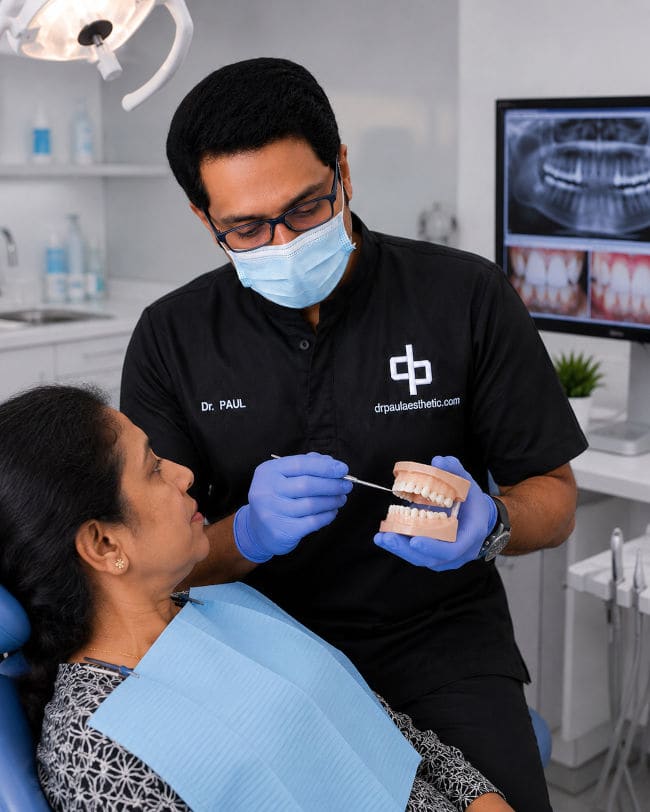
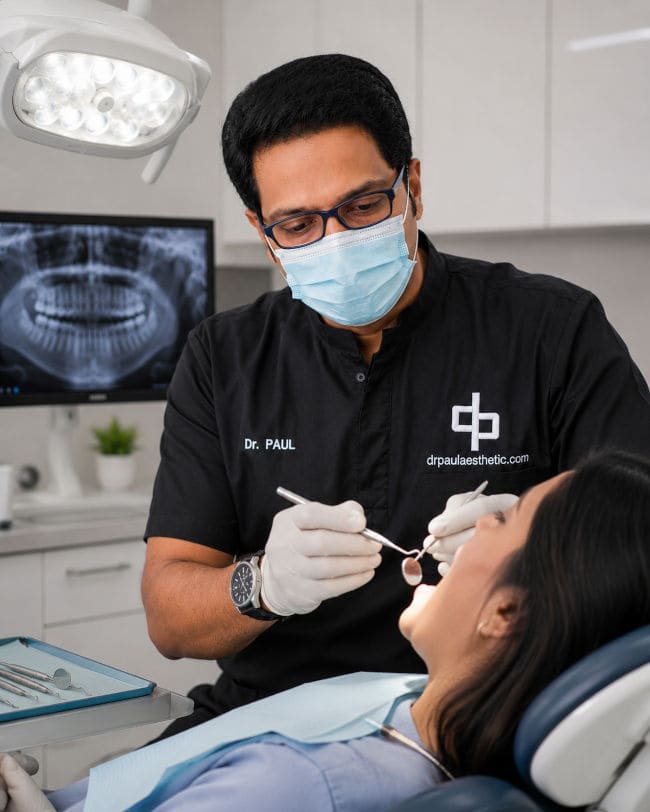
Full mouth rehabilitation — sometimes called full mouth reconstruction — is a comprehensive approach for people whose teeth are extensively worn, broken, decayed or missing. It rebuilds both function and appearance, usually through a carefully staged plan.
The short answer
Full mouth rehabilitation may be considered when many teeth are severely worn, damaged or missing, often together with bite problems. It may combine crowns, bridges, implants, root canal treatment, gum therapy and sometimes orthodontics, planned and delivered in stages.
Common reasons it is considered
Severe tooth wear
Grinding and clenching (bruxism) or acid erosion can wear teeth down significantly. As teeth shorten, the bite can collapse, affecting appearance, chewing and sometimes the jaw joints.
Multiple failing restorations
Old crowns, bridges and large fillings can fail at different times. Addressing them together can produce a more stable, harmonious result.
Several missing teeth
Missing teeth affect chewing and can cause neighbouring teeth to drift, changing the bite.
A combination of problems
Many patients have a mix of wear, decay, gum disease and missing teeth.
How it differs from a smile makeover
A smile makeover focuses mainly on appearance. Full mouth rehabilitation is driven by function and health — restoring a stable bite and comfortable chewing — though appearance is also improved.
What it may involve
- Crowns and onlays
- Bridges
- Dental implants
- Root canal treatment
- Gum treatment
- Orthodontics in some cases
- Night guards for protection
How treatment is staged
1. Comprehensive diagnosis
Records include photographs, X-rays, 3D imaging, scans and a detailed bite analysis. The cause of the problem — such as grinding or erosion — is identified.
2. Disease control
Decay, gum disease and infection are treated first.
3. Provisional phase
Temporary restorations are often used to test a new bite and new tooth shapes. This allows adjustments for comfort and function before final restorations are made.
4. Definitive restorations
Final crowns, bridges or implant restorations are made and fitted.
5. Maintenance
A night guard and regular reviews help protect the result.
How long does it take?
Often several months to more than a year, depending on the treatments involved and healing times.
Considerations
- Treatment is complex and requires commitment
- Multiple restorations need ongoing maintenance
- Adapting to a new bite can take time
- Costs reflect the scope of treatment; phased plans can spread them
Conclusion
Full mouth rehabilitation can restore comfort, function and confidence when many teeth are affected. It starts with careful diagnosis and a clear, staged plan. Learn more about full mouth rehabilitation or book a consultation.
Have a question about your own teeth?
Dr. George Paul can assess your situation and explain the options that suit you.
Request a consultation