Busy family routines, school runs, a hot climate and sugary snacks can all make dental care challenging. The good news is that a few consistent habits go a long way for every member of the family.
The short answer
Brush twice daily with fluoride toothpaste, clean between teeth, limit sugary snacks and drinks between meals, choose water for hydration, use mouthguards for sport, and keep regular dental check-ups for everyone.
Daily routines that work
Brush twice a day
Brush for two minutes in the morning and last thing at night with fluoride toothpaste. Brushing before bed is particularly important because saliva flow decreases during sleep.
Supervise children
Young children lack the dexterity to brush thoroughly. Many dental organisations recommend helping or supervising brushing until around age 7 or 8.
Use the right amount of toothpaste
Commonly recommended amounts are a smear for children under three and a pea-sized amount for ages three to six. Check with your dentist for advice specific to your child.
Spit, don't rinse
After brushing, spit out excess toothpaste but avoid rinsing with water. This leaves fluoride on the teeth to keep working.
Clean between teeth
Once teeth touch each other, flossing or interdental brushes help clean areas a toothbrush cannot reach.
Snacks and drinks
Decay risk depends more on how often teeth are exposed to sugar than the total amount.
- Keep sweets and sugary snacks to mealtimes
- Choose tooth-friendly snacks: cheese, nuts (for older children), vegetables, plain yoghurt
- Be aware that juices, flavoured milks, iced teas and sports drinks often contain sugar and acid
- Dates are nutritious but sticky and sugary — enjoy them with meals
Hydration in a hot climate
Dubai's heat means families need to drink plenty. Water is the best choice for teeth. A dry mouth reduces the protective effect of saliva and raises decay risk.
Sport and activities
Children and adults playing contact sports — football, basketball, martial arts, hockey — should wear a mouthguard. Custom-made guards from your dentist fit better and are more comfortable.
Thumb-sucking and dummies
Most children stop naturally. Prolonged habits can affect tooth position. Ask your dentist if you are concerned.
Dental check-ups
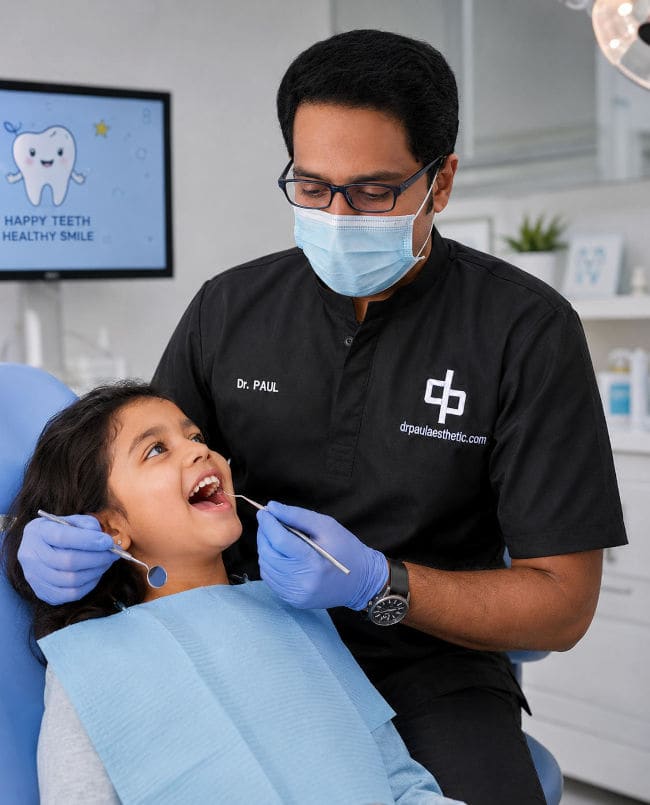
- Children: a first visit when the first tooth appears or by the first birthday is commonly recommended. See Dental Care for Children: Preparing for a First Visit
- Everyone: regular check-ups at intervals recommended by your dentist
Setting a good example
Children learn by watching. Brushing together, talking positively about the dentist and making healthy choices as a family all help.
Travelling families
Pack a travel dental kit, keep routines on holiday, and arrange check-ups around school breaks.
Conclusion
Healthy family smiles come from consistent everyday habits and regular professional care. For children's dental care, see our pediatric dentistry page or book a family check-up.
Sources and further reading
Have a question about your own teeth?
Dr. George Paul can assess your situation and explain the options that suit you.
Request a consultation